Why We Don't Use Palm Oil
90% of conventional soap bars use palm oil — often hiding under names you'd never recognize. Here's why 2nd Ground has been palm oil-free since 2015.

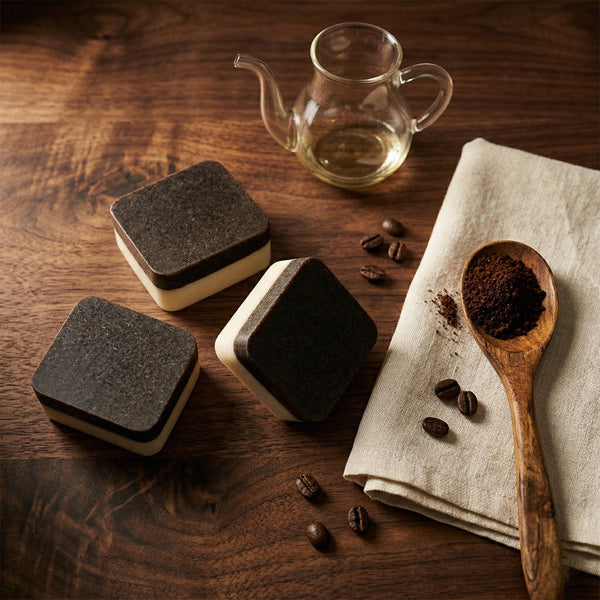
I didn’t start making skincare bars to save the world. I started because I was tired of plastic bottles and mystery ingredients. 2nd Ground is a coffee skincare soap bar: palm oil-free, plastic-free, and made from upcycled espresso grounds. But once I dug into palm oil, and I mean really dug, I couldn’t unsee what the soap industry was doing.
Here’s the thing: 90% of conventional skincare bars use palm oil. Not “most.” Not “some.” Ninety percent. And it’s almost never listed as “palm oil” on the label, which makes the math even worse.
This is what pushed me to build 2nd Ground differently from day one in 2015. No palm oil. No plastic. No synthetics. What I learned along the way might surprise you—especially the part about what’s actually hiding in your shower.
Why is palm oil bad for the environment?
Let me ground this in real numbers, because vague eco-talk does nobody any good.
Palm oil plantations exploded from 3.3 million hectares in 1970 to 28.7 million hectares by 2020. That’s not growth, that’s invasion. And it’s driving 2.3% of global deforestation, which sounds small until you realize the scale: we’re talking millions of acres of rainforest razed in the span of a few decades.
The orangutan habitat collapse is the clearest proof of what’s happening on the ground. Eighty percent of their forest home was destroyed in just 20 years. Not metaphorically destroyed. Gone. Burned for plantation space. These aren’t abstract numbers... they’re an entire species running out of room to live.
Orangutans aren’t the only ones caught in this. Palm plantations fragment ecosystems, destroy carbon sinks, and push indigenous communities off their land. The soil degrades. The biodiversity collapses. The carbon that was locked in old-growth forest gets released into the atmosphere.
And here’s the kicker: the soap industry doesn’t need to do this. There are better options. But they’re slightly more expensive, and incremental cost matters when you’re moving millions of units.
The hidden names nobody talks about
This is where most people get tricked.
Seventy percent of cosmetic and skincare products contain palm oil or a palm oil derivative. But the labels don’t say “palm oil.” They say things like sodium palmate, sodium palm kernelate, palm kernel oil, or glyceryl stearate. Ingredients so buried in the fine print that most people never know what they’re actually buying.
It’s technically not deception, but it’s close enough.
I’ve seen skincare bars marketed as “natural” and “eco-conscious” that are essentially 60% hidden palm derivatives. The marketing team gets to call it natural (it’s from a plant, technically), and the customer feels good. The planet doesn’t.
When I was formulating the bars I make at 2nd Ground, I made a decision early: I was going to know exactly where every single oil came from. I wasn’t going to hide behind ingredient names. And I wasn’t going to use palm in any form, not the oil, not the kernelate, not the derivatives.
What I use instead—and why it actually works
The closest plant-based substitute to palm oil is babassu oil. It has similar fatty acid properties, similar melting points, and similar skin benefits. But babassu plantations don’t drive the same deforestation because they’re smaller-scale, less consolidated, and actually intercropped with other plants. Babassu is a step.

But I didn’t stop there. I use a blend of certified organic oils: olive, coconut, sunflower and castor. They’re more expensive than palm. They require more thought in formulation. But they also don’t come with a deforestation surcharge.
Here’s what matters for your skin: these oils moisturize well, they break down gently on sensitive skin, and they don’t leave the same waxy residue. Olive oil is soothing. Coconut oil builds the lather. Castor oil makes it last.
The trade-off isn’t a loss. It’s a gain.
Is sustainable palm oil actually sustainable?
This is the question that made me stop hedging on my own position.
You’ve probably seen “sustainable palm oil” or RSPO-certified products. They exist. They’re real. And they’re also a half-measure that lets the industry keep growing without fixing the core problem.
Sustainable palm oil certification means the plantation doesn’t drive new deforestation. It doesn’t mean it’s good. It means it’s less bad than the alternative. The plantations still consolidate farmland. They still simplify ecosystems to a single cash crop. They still use pesticides at scale and rely on labor practices that, let’s be honest, aren’t always pretty.
I’m not here to score points for theoretical sustainability. I’m here to make something that doesn’t require mental gymnastics to feel good about.
What you can actually do
When I built 2nd Ground, I didn’t just want to avoid palm oil. I wanted to avoid the whole extractive supply chain. The plastic, the synthetics, the single-use thinking. That’s where The Reclaimed Process came in. I use upcycled plant materials and minimal processing to create skincare bars that use every part of what I start with. Nothing goes to waste. Nothing gets packaged in plastic. Your skincare bar comes wrapped in parchment. It doesn’t come with a hidden rainforest cost baked into the supply chain.
I won’t tell you that buying palm-oil-free skincare bars is going to save the rainforest. That’s not how systemic problems work.
But I will tell you this: the beauty industry moves on margins. If enough people stop buying products with hidden palm oil, manufacturers will reformulate. They already know how. They’re just waiting for demand to shift.
Read your labels. If you see sodium palmate, sodium palm kernelate, or plain “palm kernel oil,” you know what’s actually in the product now. You can make a choice from there.
And if you want a skincare bar that’s been palm-oil-free, plastic-free, and synthetic-free since 2015, I’ve got you covered. Check out the 3-Bar Pack—it’s built on everything I learned while digging into this problem. You can also browse the full collection or find a stockist near you.
The supply chain is broken. But you don’t have to be part of breaking it.
Like the way we write about skin, coffee and waste? Add us as a preferred source and Google will show you more of it.
The bar behind the blog
Everything we write about lives in this bar.
Patented 2-in-1 coffee scrub soap. Handmade in Brooklyn from grounds everyone else throws away.
Shop the bars