What Is Upcycled Beauty?
Upcycled beauty takes waste and turns it into skincare that actually works. Here's what it means, how it differs from recycled, and why most brands get it wrong.

Every day, Brooklyn cafés toss thousands of pounds of espresso grounds. Most of it lands in a landfill. But what if those grounds became the exfoliating core of a skincare bar that actually works?
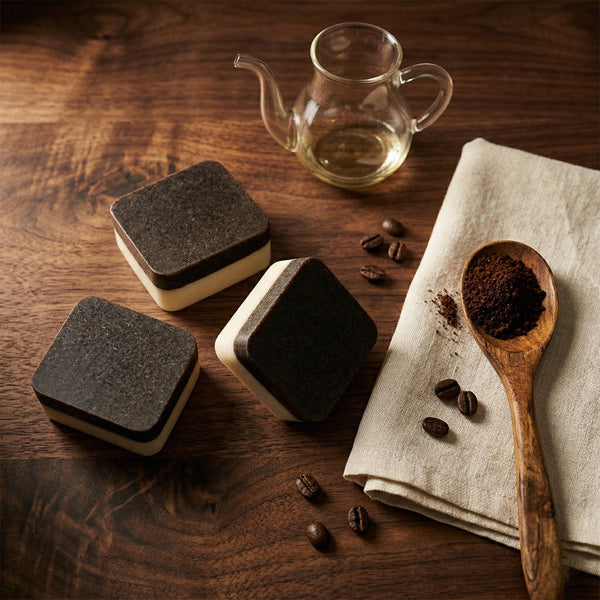
2nd Ground is a coffee skincare soap bar, a dual-action bar that exfoliates with upcycled espresso grounds on one side and cleanses with organic oils on the other.
That’s not a hypothetical. That’s upcycled beauty. It’s not the vague “sustainability theater” floating around the skincare aisle.
Upcycled beauty takes what would’ve been waste and transforms it into a functional ingredient. Not the leftover scraps of already-processed materials. Not “recycled” in the sense of melted-down plastic. Actual waste streams, captured before the dumpster, turned into skincare that delivers real results.
62% of consumers now prioritize sustainable beauty, according to Nielsen IQ. The market’s growing fast. But most brands in this space are still explaining what upcycled means. Few show what it actually does.
What Are Examples of Upcycled Beauty Products?

Upcycled beauty exists across multiple categories, and the ingredient list reads like a food rescue mission:
Coffee grounds from espresso machines and roasteries become exfoliating agents. Olive oil byproducts from mills get turned into conditioning bases. Grape seeds leftover from winemaking contribute antioxidants. Fruit peels (apple, pomegranate, citrus) end up as brightening compounds.
Brands like UpCircle pioneered the category. Kadalys works with banana waste. Lumene sources upcycled Arctic cloudberries. These aren’t niche players anymore. They’ve proven the market wants this.
But here’s the gap: most upcycled beauty brands talk about what they rescue. Rarely do they show the actual engineering required to make waste-stream ingredients work at scale.
Mark Guerino started 2nd Ground in 2015 with a different approach. Instead of sourcing pre-made upcycled ingredients from suppliers, he built a proprietary process—The Reclaimed Process—to capture espresso grounds directly from Brooklyn cafés, then develop them into a dual-action skincare bar. The grounds form the texture and scrub action on one side; the other lathers clean.
Three espresso shots per bar. That’s what gets diverted from landfill every time someone uses one of his skincare bars.
What’s the Difference Between Upcycled and Recycled in Beauty?
The distinction matters, and the beauty industry loves to blur it.
Recycled typically means: take a finished product (or packaging), break it down, and remake it into something else. Recycled plastic becomes new plastic. Recycled glass becomes new glass. It’s a loop, but it starts with material that’s already been processed.
Upcycled means: take what would be waste, a byproduct, a surplus, something discarded, and turn it into something better or higher value than the original. Espresso grounds heading to a landfill become an active skincare ingredient. Olive pomace (the solid waste left after oil extraction) becomes a moisturizer base.
Upcycling doesn’t require breaking material down to its molecular components. It rescues it as-is, or with minimal processing. That’s why it’s genuinely lower impact.
In skincare specifically, this distinction affects everything: shelf stability, efficacy, ingredient sourcing transparency. A recycled ingredient might’ve been recycled five times over. An upcycled one has a clear, traceable origin point—usually a specific waste stream you can name and verify.
When Mark sources espresso grounds from Café Grumpy and other Brooklyn roasters, he’s capturing that waste at the moment it would’ve entered the trash cycle. Not weeks later. Not after it’s been stockpiled or pre-processed. Fresh.
Is Upcycled Beauty Actually Better for the Environment?
Yes. With math attached.
Landfills produce methane. Processing virgin raw materials requires extraction, refining, and transportation. Upcycled ingredients skip that. Instead, they redirect existing waste streams that would’ve generated environmental cost regardless.
The 2nd Ground difference: he quantifies it. Three espresso shots per bar. That’s specific. That’s something you can wrap your head around, not “we’re committed to sustainability.”
But upcycled beauty only works if the final product is formulated right. A skincare bar made with contaminated waste grounds or unstable upcycled oils doesn’t reduce environmental impact—it increases it. People throw it out, buy a replacement, and now you’ve got double the waste and double the carbon from shipping.
This is where most upcycled beauty brands stumble. They source the ingredient and move on. They don’t obsess over making it stable, effective, and worth using to the last bar.
2nd Ground’s been palm oil-free, plastic-free, and synthetic-free since 2015. The dual-action bar design—exfoliant on one side, lather on the other—eliminates the need for separate products. One bar replaces a scrub and a cleanser.
That’s the environmental math that actually works.
What Ingredients Can Be Upcycled for Skincare?
The upcycled beauty pantry is surprisingly deep, here's what's being rescued and why it works:
- Coffee grounds: exfoliation, antioxidants, circulation-boosting caffeine
- Grape seeds and skins: resveratrol, tannins, antioxidant compounds
- Olive pomace: squalane-like fatty acids, conditioning agents
- Apple and citrus peels: natural acids for brightening
- Wine industry waste: polyphenols and skin-conditioning compounds
- Tea leaf residue: EGCG antioxidants, soothing properties
- Seed cake from oil pressing: proteins and minerals
The best upcycled skincare combines multiple waste streams to create a product that’s genuinely better than a single-ingredient alternative. Coffee grounds alone are a texture. Coffee grounds plus olive pomace plus an upcycled antioxidant blend becomes a thoughtful formulation.
If you’ve used a 2nd Ground bar, you’ve felt this. It’s not just exfoliating grit suspended in a base. It’s a textured scrub side paired with a creamy lather side. The espresso grounds are structural, not decorative.
Are Upcycled Beauty Products Effective?
The answer depends on whether the brand cares about formulation or just the story.
Upcycled ingredients don’t automatically work. They work because someone decided to engineer them to work. That takes time, iteration, and investment in actually making the product better, not just “better for the planet.”
Read the research. UpCircle’s upcycled coffee grounds show real exfoliating efficacy. Grape seed compounds have documented antioxidant benefits. These aren’t placebo ingredients—they’re well-studied materials that most brands have been using for years, just not from waste streams.
The upcycled part isn’t the magic. The magic is: why waste money on virgin material when you can rescue the same ingredient from a landfill, create real environmental impact, and charge a price that reflects that responsibility?
Check out The Skin Benefits of Coffee Soap for a deeper dive into why espresso grounds work on skin.
If you’re ready to try a skincare bar built on The Reclaimed Process, the 3-Bar Pack gives you three dual-action bars—and three chances to see why upcycled beauty isn’t just a marketing term. Or browse the full coffee soap collection.
Like the way we write about skin, coffee and waste? Add us as a preferred source and Google will show you more of it.
The bar behind the blog
Everything we write about lives in this bar.
Patented 2-in-1 coffee scrub soap. Handmade in Brooklyn from grounds everyone else throws away.
Shop the bars